Free Consultation | 24/7 Live Answering
(912) 325-7783
Not every fall is a legal matter. But when a property owner’s negligence creates a dangerous condition that injures someone, the law provides a path to compensation. A Savannah, GA slip and fall lawyer can help determine whether the circumstances of a fall meet the legal threshold for a premises liability claim.
Georgia law requires property owners to maintain reasonably safe conditions for people who are lawfully on their premises. When they fail to do that, and someone gets hurt as a result, that failure can form the basis of a legal claim. The type of hazard involved matters, both for understanding what happened and for building the case.
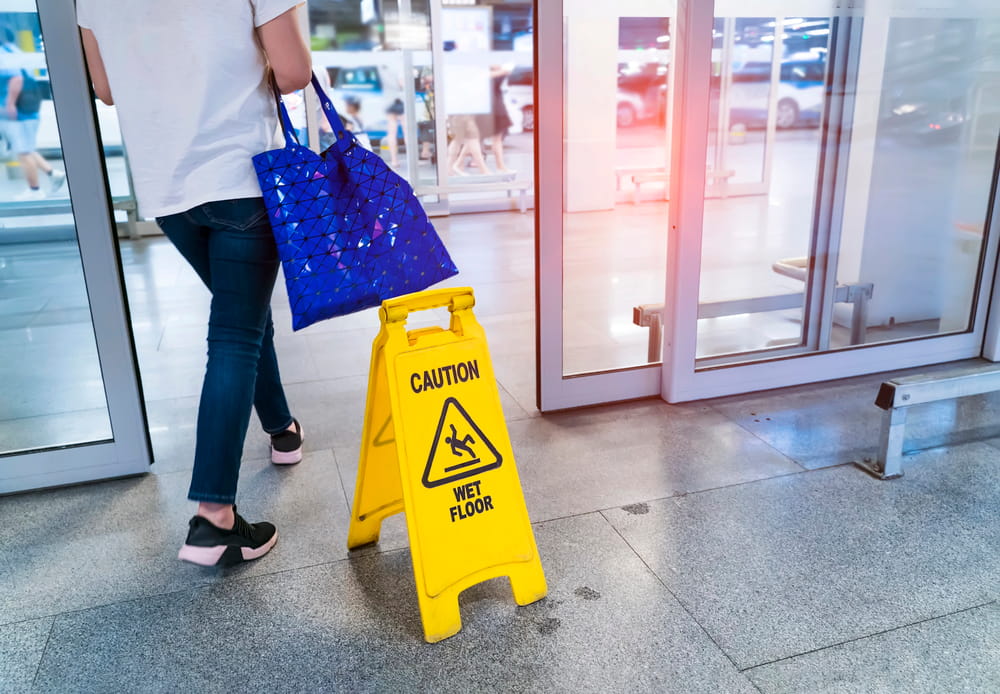
This is one of the most common scenarios. Spilled liquids, recently mopped floors, tracked-in rain, and leaking refrigeration units in grocery stores all create slip hazards. The legal question isn’t just whether the floor was wet. It’s whether the property owner knew or should have known about the condition and failed to address it or warn visitors. A wet floor sign doesn’t automatically eliminate liability, particularly if the hazard was left unaddressed for an unreasonable period.
Cracked sidewalks, broken pavement, uneven transitions in flooring, loose tiles, and damaged steps all fall into this category. These hazards often result from deferred maintenance and are especially dangerous for older adults. Falls from uneven surfaces frequently cause fractures, head injuries, and joint damage that require significant medical treatment.
Inadequate lighting in parking lots, stairwells, hallways, and entryways prevents people from seeing hazards in their path. When a property owner fails to maintain proper lighting in areas where people are expected to walk, and someone falls as a result, that failure can support a negligence claim.
Merchandise left in store aisles, extension cords running across foot traffic areas, boxes stacked in walkways, and debris on floors are all preventable hazards. These conditions show up in retail stores, warehouses, offices, and rental properties. When a fall results from an obstruction that shouldn’t have been there, the question of who placed it there and how long it had been present becomes central to the case.
Broken handrails, missing steps, steep angles without proper signage, and slippery stair surfaces are common sources of serious falls. Staircases and ramps have specific building code requirements for a reason. When those standards aren’t met, or when known problems go unrepaired, property owners bear responsibility for the consequences.
Falls don’t only happen indoors. Ice and standing water in parking lots, uneven pavement in pedestrian areas, poorly maintained walkways, and hidden drop-offs on commercial or residential property all present real risks. Property owners in Georgia are expected to address these conditions within a reasonable time after they arise or become known.
Falls involving any of these hazards can cause injuries ranging from minor bruising to traumatic brain injuries, spinal damage, and broken bones. According to the National Floor Safety Institute, falls are a leading cause of emergency room visits in the United States, and the majority involve preventable surface hazards.
To recover compensation in Georgia, an injured person generally needs to demonstrate:
Timing matters in these cases. Surveillance footage, incident reports, maintenance logs, and witness statements can all disappear or become harder to obtain as time passes. Acting quickly after a fall gives an attorney the best opportunity to gather evidence while it’s still available.
Ben Clary has practiced personal injury law in Georgia for nearly a decade, with a track record that includes premises liability cases of all kinds. Born and raised in Savannah, he brings both local knowledge and a methodical approach to every case he takes on. At Chattahoochee Injury Law, we represent people injured on someone else’s property throughout Savannah, GA, and across Georgia. If you were injured in a slip and fall and want to understand whether you have a viable claim, contact our office to speak with an attorney who handles these cases regularly.