Free Consultation | 24/7 Live Answering
(912) 325-7783
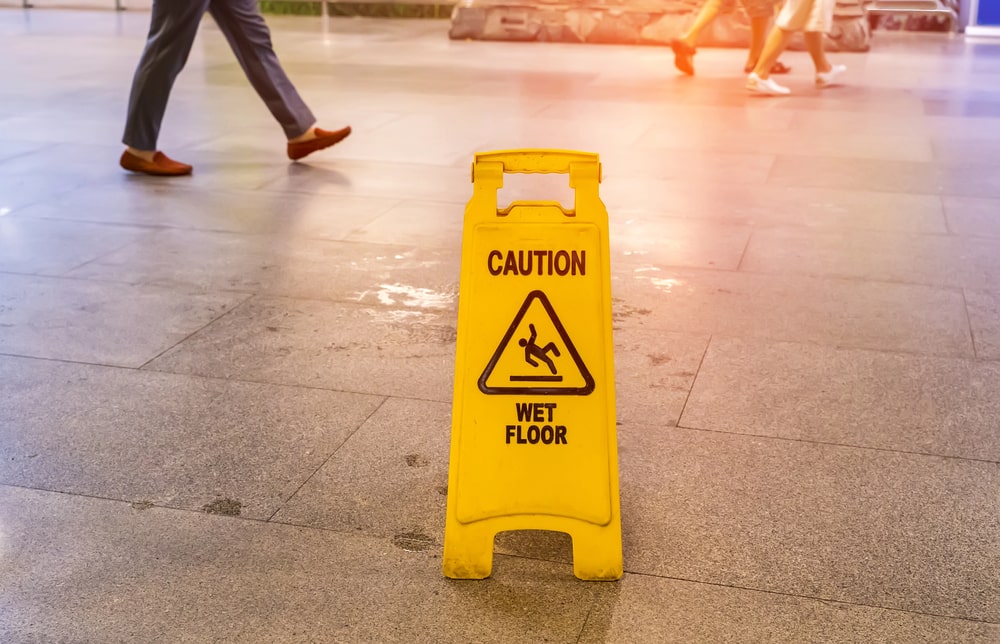
If you’ve been injured in a fall on someone else’s property, you’re probably wondering whether you have a case. The answer depends on several factors—but the short version is this: property owners in Georgia have a legal duty to maintain safe conditions. When they fail, and someone gets hurt, they can be held responsible.
Falls happen fast. The consequences don’t.
A wet grocery store floor. An uneven sidewalk outside a restaurant. A broken staircase in an apartment complex. These hazards cause serious injuries every day in Savannah. Broken hips. Fractured wrists. Head trauma. Spinal damage. And for older adults, a bad fall can trigger a cascade of health problems that lasts years.
Our Savannah, GA slip and fall lawyer has spent 13 years representing people injured on dangerous properties throughout Chatham County. At Chattahoochee Injury Law, we investigate these cases thoroughly, identify liable parties, and fight for compensation that reflects the true cost of your injuries.
Consultations cost nothing. You pay no fees unless we win.
Not every personal injury attorney handles premises cases well. These claims demand proof that the property owner knew—or should have known—about the dangerous condition. That’s a higher bar than a typical car crash case where fault is often obvious.
Ben Clary founded Chattahoochee Injury Law after years of handling premises liability claims across Georgia. He understands what evidence courts require. Incident reports. Maintenance logs. Surveillance footage. Prior complaints. Inspection records. We know where to look and how to preserve evidence before it disappears.
Ben graduated from Mercer University’s Walter F. George School of Law and completed his undergraduate degree at the College of Charleston. He carries a Martindale-Hubbell AV Preeminent Rating—their highest mark for ethics and legal ability. Super Lawyers has also recognized his work.
Here’s something most people don’t realize: businesses and landlords have insurance specifically for injury claims. And those insurance companies employ adjusters whose job is to deny or minimize payouts. They’ll argue the hazard was “open and obvious.” They’ll claim you weren’t paying attention. They’ll dig through your medical history looking for pre-existing conditions to blame.
We’ve seen these tactics for over a decade. They don’t work on us.
Our firm has recovered millions of dollars for clients hurt in preventable accidents. Every case required pushing past initial denials and low offers. A personal injury lawyer in Savannah who understands premises liability makes the difference between a fair settlement and a frustrating runaround.
Big firms pass you off to paralegals. You call, leave messages, wait days for callbacks. That’s not how we operate.
Ben Clary handles cases personally. He answers questions directly. When you need an update, you get one.
★★★★★
“I can’t say enough about the Chattahoochee injury law firm !! They truly helped me through one of the most difficult times of my life. They were always so positive, accesible, and communicative. I highly recommend this firm if you are looking for a team that will go above and beyond, and will take some of the load off of dealing with a personal injury. I felt like Ben Clary and his team allowed me to have some peace of mind while I was recovering. Definitely hire this firm, you won’t regret it!” — Jesus Rosas
More client stories are available on our Google Business Profile.
We take slip and fall cases on contingency. That means no retainers. No hourly billing. No invoices arriving while you’re still in physical therapy. Our fee comes from the settlement or verdict—period. If we don’t recover money for you, you owe us nothing.
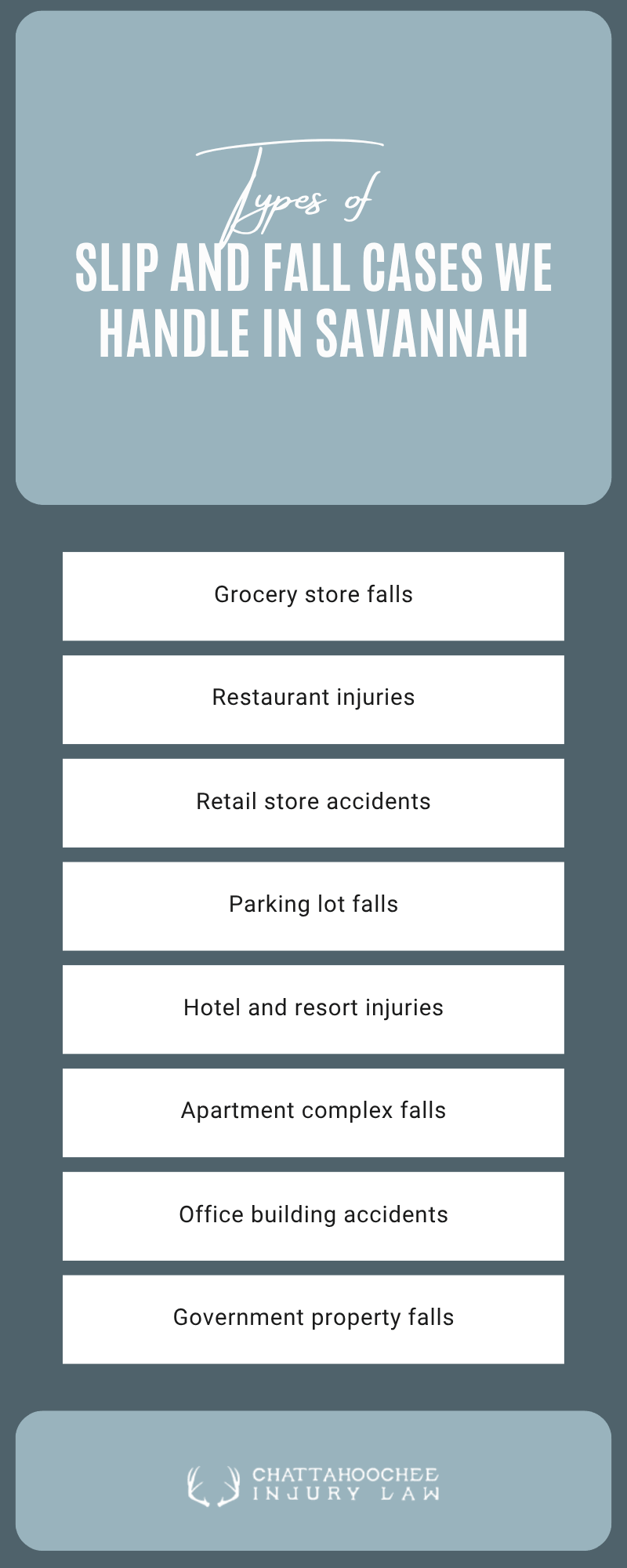
 Falls occur in countless settings. The location affects which parties bear responsibility and what evidence we pursue. These are the premises cases we handle most frequently:
We evaluate injury claims across all property types. Each situation requires different investigation strategies.
Georgia premises liability law doesn’t make property owners automatically responsible every time someone falls. You have to prove certain elements.
First, the owner must have had actual or constructive knowledge of the hazard. “Actual knowledge” means they knew about it—an employee saw the spill, a manager received a complaint. “Constructive knowledge” means the hazard existed long enough that a reasonable owner would have discovered it through ordinary care. A puddle that formed 30 seconds before you slipped presents a harder case than one that sat there for an hour while employees walked past.
Second, the hazard must not have been “open and obvious.” Georgia courts often rule that property owners aren’t liable for dangers that any reasonable person would have noticed and avoided. This defense comes up constantly. We counter it by showing that the plaintiff’s attention was reasonably directed elsewhere—at merchandise, signage, or other distractions the property owner created.
Georgia applies modified comparative fault under O.C.G.A. § 51-12-33. If you bear some responsibility for your fall—maybe you were looking at your phone—your compensation gets reduced by that percentage. But you can still recover as long as your fault stays below 50%.
The statute of limitations for premises liability claims is two years from the injury date per O.C.G.A. § 9-3-33. Claims against government entities have much shorter notice deadlines—sometimes as little as six months to a year. Don’t wait.
The Georgia Court of Appeals has issued numerous decisions refining these standards. Each case turns on specific facts.
Slip and fall injuries range from minor bruises to life-altering trauma. Georgia law provides compensation across three categories.
These cover actual financial losses you can document. Medical bills come first: emergency room visits, imaging, surgery, hospitalization, follow-up appointments, physical therapy, chiropractic care, medications, and medical equipment like crutches or wheelchairs.
Falls frequently cause traumatic brain injuries—especially when the victim’s head strikes the floor. According to the Centers for Disease Control and Prevention, falls are the leading cause of TBI-related emergency department visits, hospitalizations, and deaths among older Americans.
Lost wages cover income missed during recovery. Lost earning capacity applies when injuries permanently reduce your ability to work. A warehouse worker who can’t lift heavy objects anymore faces different long-term losses than someone with a desk job.
You can also recover costs for household help you needed during recovery, transportation to medical appointments, and other accident-related expenses.
Some losses resist easy calculation. Pain and suffering compensation addresses ongoing physical discomfort, emotional distress, anxiety about future falls, depression, embarrassment, and reduced quality of life.
An elderly person who loses independence after a hip fracture experiences different harm than a young adult with the same injury. Both deserve compensation, but the amounts reflect individual circumstances. Georgia doesn’t cap non-economic damages in most premises liability cases.
Property owners who showed willful disregard for safety may face punitive damages. These apply when the owner knew about a dangerous condition, knew people could get hurt, and did nothing anyway.
Under O.C.G.A. § 51-12-5.1, punitive damages are usually capped at $250,000. Exceptions exist for particularly egregious conduct.
 If you’ve fallen on someone else’s property, what you do next matters. Evidence fades. Witnesses forget. Records get lost or destroyed. Here’s how to protect yourself.
1. Report the incident immediately. Tell a manager, property owner, landlord, or employee. Ask them to create a written incident report. Get a copy if possible. If they refuse to give you one, note who you spoke with, when, and what they said.
2. Document everything. Pull out your phone. Photograph the hazard that caused your fall—the wet floor, broken step, uneven pavement, whatever it was. Capture the surrounding area too. Wide shots and close-ups. Photograph your injuries before they heal.
3. Get witness information. Did anyone see you fall? Get names and phone numbers. Witnesses provide crucial corroboration. Their accounts carry weight that your own testimony alone cannot.
4. Seek medical attention. Even if you think you’re fine. Adrenaline masks pain. Some injuries—concussions, internal bleeding, hairline fractures—don’t show symptoms immediately. Emergency room records also establish that your injuries resulted from this specific incident.
5. Keep your shoes and clothing. The shoes you wore may show how the hazard caused your fall. Your clothing may have evidence of the conditions—wetness, grease, debris. Don’t wash or dispose of these items.
6. Don’t give recorded statements. Property owners and their insurers will want your account of what happened. Be careful. Recorded statements lock you into details you may remember differently later. Consult an attorney first.
7. Request surveillance footage. Many businesses have cameras. But they overwrite recordings regularly—sometimes within days. A lawyer can send a preservation letter requiring the property owner to save relevant footage.
8. Track your symptoms. Keep a journal of your pain levels, limitations, doctor visits, and how the injury affects daily life. This documentation supports your claim for non-economic damages.
9. Save all receipts. Medical bills, pharmacy costs, parking at appointments, transportation expenses—everything related to your injury and treatment.
10. Contact a Savannah slip and fall attorney. The sooner you have legal representation, the better positioned you are to preserve evidence and avoid mistakes that hurt your case.
Falls are a bigger problem than most people realize. The data paints a concerning picture.
According to the National Floor Safety Institute, falls account for over one million hospital emergency room visits annually. They’re the leading cause of workers’ compensation claims and a major source of premises liability lawsuits nationwide.
The Centers for Disease Control and Prevention reports that about 36 million older adults fall each year. Roughly 3 million end up in emergency departments with fall injuries. Over 32,000 die. Hip fractures alone affect around 300,000 older Americans annually—and one in five hip fracture patients dies within a year.
These aren’t just statistics for seniors. The Bureau of Labor Statistics tracks workplace falls, which remain a top cause of occupational injury across industries. Wet floors, cluttered walkways, and uneven surfaces cause injuries in offices, restaurants, retail stores, and warehouses every day.
Savannah’s climate contributes to fall hazards. Heavy rain creates slippery surfaces. Humidity promotes mold growth on outdoor walkways. Historic properties with uneven brick sidewalks and old infrastructure add additional risk. Tourist traffic means unfamiliar people navigating unfamiliar spaces—often while distracted.
Retail establishments, restaurants, and hotels see frequent fall claims. These businesses serve high volumes of visitors, increasing exposure to liability when hazards aren’t addressed promptly.
 How Do I Know If I Have A Valid Slip And Fall Case?
Three elements matter: the property owner knew or should have known about the hazard, they failed to fix it or warn visitors, and that failure caused your injury. If you can check those boxes—or think you might—a free consultation can clarify your options.
Georgia’s comparative fault rule reduces your compensation by your percentage of responsibility. If a jury assigns you 20% fault, you recover 80% of damages. But if you’re 50% or more at fault, you recover nothing. Property owners always try to shift blame. We push back.
It depends on injury severity, medical costs, lost income, pain and suffering, and available insurance coverage. Minor soft tissue injuries produce smaller settlements than broken hips requiring surgery. We can estimate value once we understand your specific situation.
Two years from the injury date for most cases. Claims against government entities have shorter deadlines—sometimes six months to a year for initial notice. Don’t wait to consult an attorney.
Photographs of the hazard, surveillance footage, incident reports, witness statements, and your medical records. Evidence of prior complaints or similar incidents at the same location strengthens claims. We investigate thoroughly to build the strongest possible case.
Probably not. Most premises liability claims settle before trial. Insurance companies prefer avoiding jury uncertainty. But if a fair settlement isn’t possible, we’re prepared to litigate.
The “open and obvious” defense comes up constantly. We counter it by showing why the hazard wasn’t as obvious as they claim—poor lighting, distracting displays, visual obstructions, or conditions that only became apparent at close range.
We work on contingency. No upfront fees. No hourly billing. Our fee comes from your recovery—if there’s no recovery, you pay nothing.
Yes, but different rules apply. Georgia’s ante litem notice requirements demand written notice to the government within specific timeframes—often much shorter than the regular statute of limitations. These claims are possible but require prompt action.
Delayed symptoms are common. Adrenaline masks pain. Soft tissue injuries develop gradually. This is why immediate medical evaluation matters—it documents your condition right after the fall, establishing a baseline that connects later symptoms to the incident.
Workplace falls typically fall under workers’ compensation. But if a third party—not your employer—caused the dangerous condition, you may have a premises liability claim against them in addition to your workers’ comp benefits.
Almost certainly not. First offers usually undervalue claims significantly. Insurers know injured people want quick resolution. An attorney can evaluate whether the offer fairly compensates your injuries or whether pushing for more makes sense.
Footage helps, but cases can succeed without it. Witness testimony, incident reports, your own photographs, maintenance records showing neglected repairs, and evidence of prior complaints all contribute to proving liability.
Anywhere from a few months to over a year. Simple cases with clear liability settle faster. Disputes over fault, extensive injuries requiring ongoing treatment, or multiple defendants all extend timelines. Trials take even longer.
Look for someone who handles premises liability specifically—not just general personal injury work. Check client testimonials. Schedule a consultation to assess communication style and fit.
Certain Savannah locations see higher rates of fall injuries due to age, traffic, or maintenance issues.
The Historic District features brick sidewalks that have settled unevenly over centuries. Tree roots push through walkways. Historic buildings weren’t designed with modern accessibility in mind. Tourists focused on architecture trip over hazards locals have learned to avoid.
River Street presents particular challenges. Cobblestone surfaces, steep ramps from the bluff, and proximity to bars and restaurants create fall risks—especially at night.
Forsyth Park sees heavy foot traffic on paths that sometimes develop cracks, root intrusions, and drainage problems.
Retail developments along Abercorn Street experience constant shopper traffic. Wet floors, spills, and merchandise displays blocking walkways cause injuries regularly.
Tybee Island businesses contend with sand tracked indoors, pool areas, and weathered outdoor walkways. Vacation rental properties sometimes defer maintenance between guests.
Apartment complexes throughout Chatham County vary widely in maintenance quality. Common areas, stairwells, and parking lots all present potential hazards when property management cuts corners.
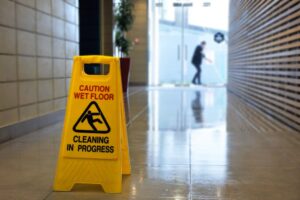 These resources may help after a fall injury. Listing does not constitute endorsement by Chattahoochee Injury Law.
Property owners have insurance companies and lawyers protecting their interests. You deserve someone fighting just as hard for yours.
Contact us to schedule a free consultation with a Savannah slip and fall lawyer. We’ll review what happened, explain your options, and answer your questions honestly.
No upfront costs. No obligation. Just straightforward guidance from attorneys who handle these cases regularly.