Free Consultation | 24/7 Live Answering
(912) 325-7783
Fault doesn’t prove itself. After a motorcycle accident, the burden of showing that the other driver was responsible falls on the injured rider’s legal team, and that process is more involved than most people expect. A Savannah, GA motorcycle accident lawyer builds that case piece by piece, starting from the moment they take the case.
Georgia law requires an injured person to prove that the other driver was negligent. That means showing they had a legal duty to drive carefully, that they failed to meet that duty, and that the failure directly caused the accident and the resulting injuries. Every piece of evidence collected serves that framework.
Negligence shows up in a lot of different ways. A driver who ran a stop sign, turned left without yielding, or drifted into a motorcycle’s lane while looking at a phone has behaved negligently. The challenge is documenting it in a way that withstands a legal challenge.
The responding officer’s report is one of the first documents an attorney requests. It captures initial observations, driver and witness statements, road conditions, and sometimes a direct notation of fault. When the officer issued a citation to the other driver at the scene, or the other driver was arrested for DUI, that becomes a meaningful piece of the liability picture. It’s not conclusive on its own, but it counts.
People who watched the crash happen and have no connection to either party carry real weight. Their accounts, especially when they align with physical evidence, can corroborate the rider’s version of events in a way that’s hard for an insurer or defense attorney to dismiss.
Intersection cameras, business surveillance systems, nearby dashcams, and even residential doorbell cameras sometimes capture the exact moment of impact. This type of evidence can remove all ambiguity about what happened. Attorneys move quickly to preserve it because footage gets overwritten, sometimes within days.
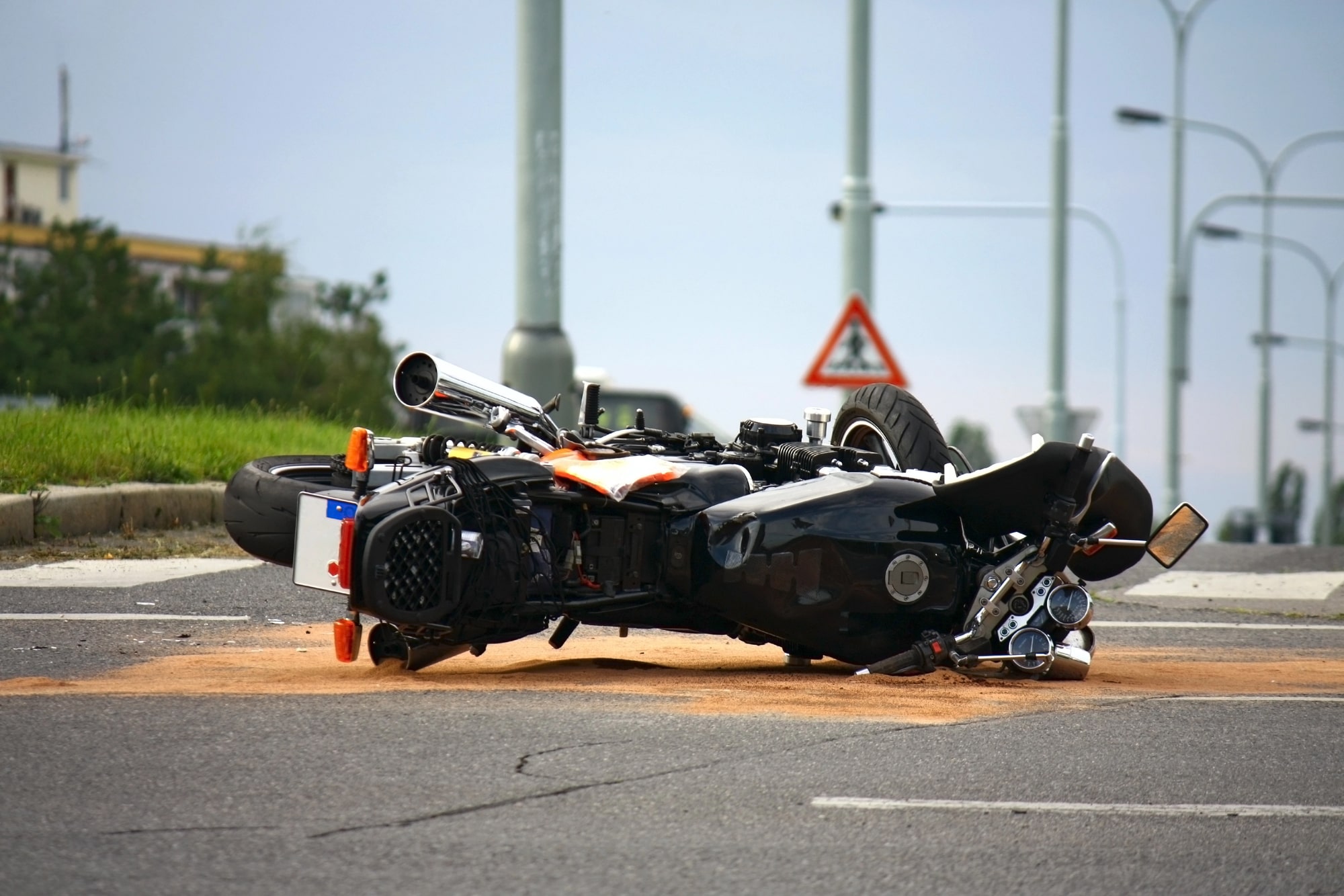
The physical evidence at the scene tells its own story. Skid marks, gouge marks, debris patterns, and the final positions of the vehicles all help reconstruct the sequence of events. Vehicle damage itself, where the impact occurred, and how severe it was, can indicate speed, direction, and who had the right of way.
In cases where fault is disputed, reconstruction professionals analyze all available physical and digital evidence to produce an independent account of how the crash occurred. Their testimony can carry significant weight in negotiations and at trial.
Motorcycle riders face a particular challenge that car accident victims generally don’t. Insurance adjusters and, in some cases, jurors come in with assumptions that riders take unnecessary risks or are at least partly responsible for what happens to them. That bias is something a prepared attorney addresses head-on, using objective evidence to keep the focus on what the other driver actually did.
Georgia’s modified comparative fault rule means that if a rider is found to share any percentage of fault, their recovery is reduced by that amount. If they’re found to be 50 percent or more at fault, they recover nothing. Countering unfair fault assignments is a real and important part of these cases.
You can review Georgia’s comparative fault statute directly through the Georgia General Assembly’s code.
The actions taken in the hours and days after the crash affect the case. A few things are worth keeping in mind:
Talking to a Savannah, GA motorcycle accident lawyer early in the process means evidence gets preserved while it still exists, and the investigation starts before details fade.
No single piece of evidence wins a motorcycle accident case. It’s the combination of documentation, witness accounts, physical evidence, and legal analysis that builds a compelling claim. An attorney’s job is to pull all of that together into a clear account of what happened and why the other driver is responsible.
Ben Clary has been practicing personal injury law in Georgia for nearly a decade and was born and raised in Savannah. He approaches every case the way a distance runner approaches a race: with thorough preparation and a focus on long-term outcomes, not shortcuts. At Chattahoochee Injury Law, we represent injured riders across Georgia. If you were hurt in a motorcycle accident and want to understand what proving fault actually involves, contact our office to speak with an attorney who handles these cases.