Free Consultation | 24/7 Live Answering
(912) 325-7783
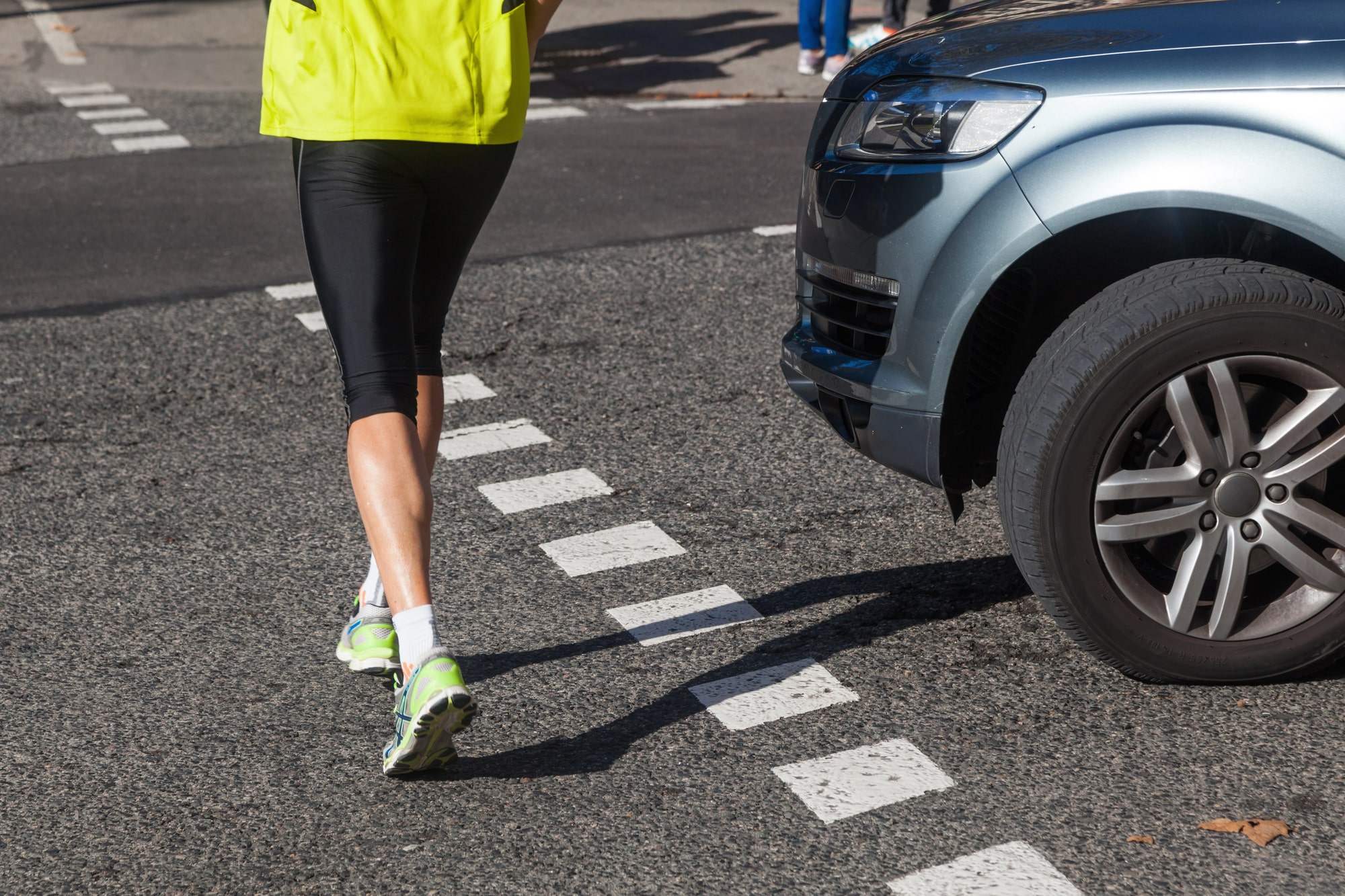
Crashes involving people on foot raise a specific set of questions about who had to yield. Georgia’s rules differ depending on where the person crossed. The answers below walk through the statutes and how fault gets divided afterward.
Georgia’s crosswalk statute tells a driver to stop and remain stopped to let a pedestrian cross within a crosswalk when the pedestrian is on the half of the roadway the vehicle is using. Slowing down or edging around the person does not satisfy that duty, and a driver who starts moving again while the person is still crossing has broken the rule even after an initial stop.
Pedestrians have duties too. The same statute says a person may not suddenly leave a curb or other place of safety and walk or run into the path of a vehicle so close that the driver cannot yield. That sentence matters when the facts allow it, because the exact location and timing of the step off the curb can shift blame.
The companion statute says a pedestrian crossing at any point other than a marked crosswalk, or an unmarked crosswalk at an intersection, must yield to vehicles unless already in the roadway under safe conditions. Between adjacent intersections controlled by signals, crossing is allowed only in a marked crosswalk, and diagonal crossing is prohibited unless a traffic-control device allows it.
A walker who crossed mid-block is not left without a claim. Drivers also owe people on the road ordinary care, and a Hinesville personal injury lawyer weighs both sides of that equation when judging what a case is worth.
Georgia’s apportionment law reduces an award by the injured person’s own share of fault, and it bars recovery entirely when the plaintiff is 50 percent or more responsible. A person found 20 percent at fault would see a $100,000 award fall to $80,000, while a person found 50 percent at fault would recover nothing.
Evidence that tends to matter in these disputes includes:
Because so much turns on percentages, that material should be preserved quickly. A Hinesville pedestrian accident lawyer can send preservation letters before businesses overwrite their video, which some systems do on a short loop.
Sometimes the driver is not the only party in the picture. A delivery driver on the clock, a company vehicle, or a road with a dangerous design can all enter the analysis. A Hinesville car accident lawyer traces those connections by asking who employed the driver and who owned the vehicle.
When the vehicle that struck a pedestrian was a company truck, the claim can reach the employer and its insurer. That is territory a Hinesville truck accident lawyer works in regularly.
Georgia’s pedestrian statutes apply statewide, so the crosswalk and mid-block rules above govern a crash in Savannah the same way they govern one in Hinesville. Local facts such as signal timing and street design still differ, and a Savannah pedestrian accident lawyer studies those details for that city.
The same is true to the northwest. Crossings on the busy roads around Statesboro raise their own questions, and a Statesboro pedestrian accident lawyer reviews them with the statewide rules in hand.
Georgia’s general limit for personal injury suits is two years, counted from when the claim arises. Claims against a city or county carry much shorter notice requirements, so a crash involving a government vehicle or a road defect needs attention almost immediately.
Photographs, medical records, and the names of witnesses protect a claim from the first week, and they cost nothing to gather. Anyone hurt on foot near Hinesville can reach out to Chattahoochee Injury Law to talk through the facts and see which of these statutes fit them.